
What You Need to Know Before Putting Hardwood Floors in Your Kitchen
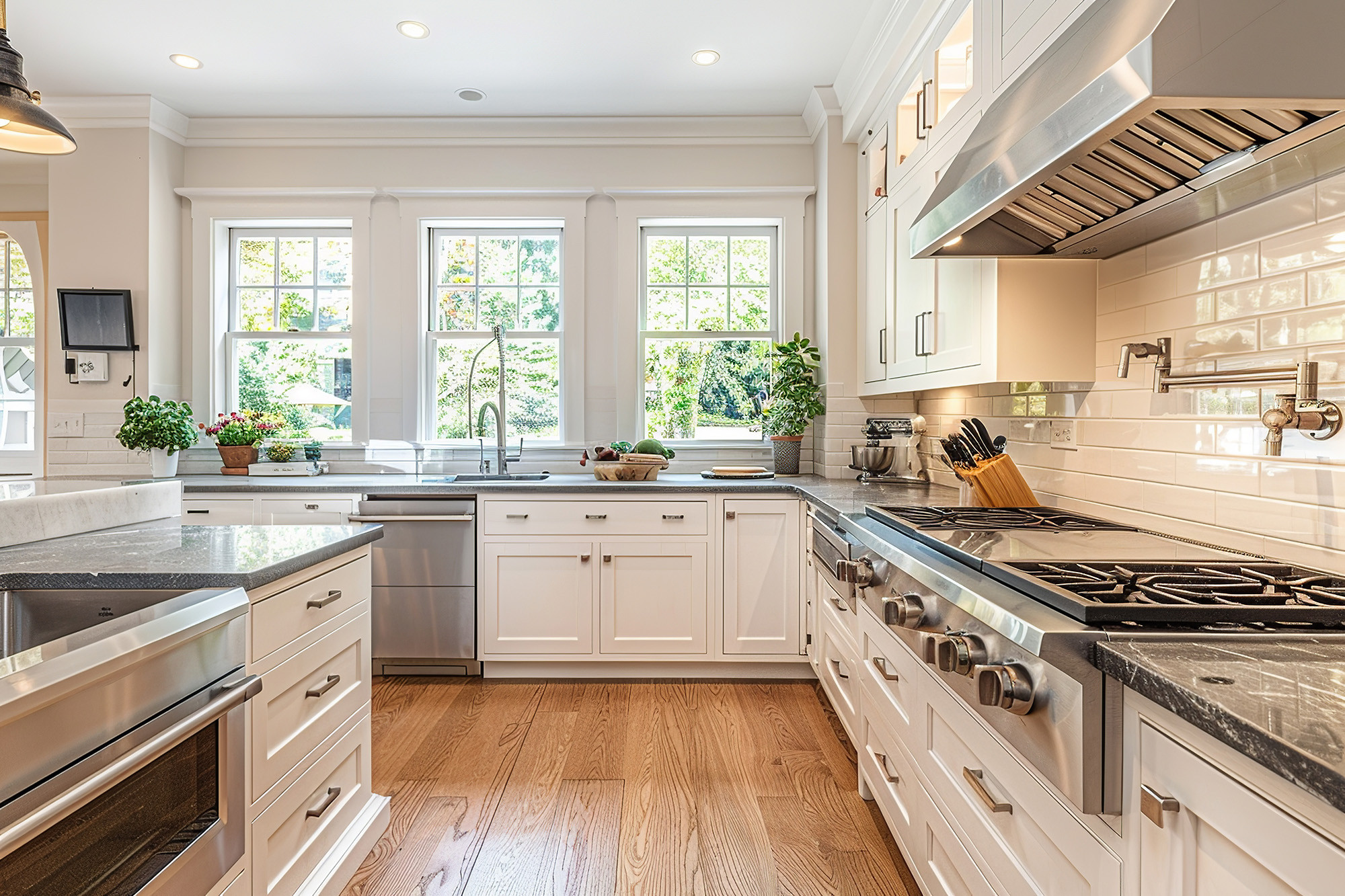
You can successfully install hardwood floors in your kitchen, provided you select the right wood species, choose an appropriate plank construction, and thoroughly prepare your subfloor. Hardwood creates a warm, seamless transition between your cooking area and open-concept living spaces while delivering enduring visual appeal. Because kitchens experience continuous foot traffic, dropped utensils, liquid spills, and humidity shifts, you need to understand how to protect your investment before installation begins.
At In and Out Flooring, our philosophy is built on delivering floors that endure and style that inspires. Here is what you need to know about material selection, moisture defense, subfloor preparation, and long-term care when putting hardwood floors in your kitchen.
Can You Put Hardwood Floors in a Kitchen?
Yes, you can safely put hardwood floors in your kitchen. Modern protective finishes, high-performance sealants, and engineered plank designs make genuine wood flooring a practical, luxurious surface for food preparation areas. Hardwood is naturally softer and warmer underfoot than ceramic tile or stone, reducing physical fatigue during long hours of cooking and meal preparation.
When you connect an open-concept kitchen to an adjacent dining room or living space, continuous hardwood eliminates awkward transition strips and visually expands your interior. Whether you are modernizing a historic residence in Mountain Brook, refreshing a classic home in Homewood or Vestavia Hills, or updating a busy household in Hoover or Greystone, hardwood brings cohesive warmth and proven resale value to your living spaces.
Engineered vs. Solid Hardwood: Which Is Better for Your Kitchen?
Engineered hardwood is generally the superior choice for kitchens because its multi-ply construction delivers exceptional dimensional stability against moisture and temperature swings. While both solid and engineered options feature authentic wood surfaces, their structural cores react differently to the heat, steam, and spills common in cooking areas.
Engineered Hardwood: Maximum Stability for Kitchen Environments
Engineered hardwood consists of a genuine hardwood veneer bonded over multiple cross-laminated layers of high-density plywood. This alternating structure balances internal tension and restricts board movement.
- Moisture Resistance: Engineered planks resist expanding, contracting, and warping when exposed to kitchen steam, spills, and humidity shifts.
- Subfloor Versatility: You can install engineered hardwood directly over concrete slabs or wood subfloors.
- Wide Plank Stability: If you prefer wider planks for a modern aesthetic, engineered construction delivers the strength needed to prevent board cupping.
Solid Hardwood: Classic Longevity with Lifelong Refinishing Potential
Solid hardwood planks are milled from a single piece of timber, typically three-quarters of an inch thick.
- Refinishing Capability: You can sand and refinish solid hardwood multiple times over several decades, making it a lasting architectural feature.
- Historic Continuity: If you live in an established neighborhood with original oak floors, installing matching unfinished solid hardwood allows our team to sand and stain the new and old floors together for an exact match.
- Climate Sensitivity: Because solid wood expands and contracts across its grain during seasonal weather changes, it requires consistent indoor humidity control in kitchen spaces.
How Central Alabama Humidity Affects Kitchen Hardwood
High ambient humidity can cause kitchen hardwood planks to expand, cup, or crown if indoor moisture levels are left unmanaged. Central Alabama is known for long, sweltering summers with heavy outdoor humidity. When regional weather combines with everyday kitchen activities like running your dishwasher, boiling water, and washing dishes, your floors face regular moisture exposure.
Wood is a hygroscopic material that absorbs and releases airborne moisture:
- Plank Cupping: If the underside of your board absorbs moisture from a damp subfloor while the top surface stays dry, the board edges curl upward.
- Plank Crowning: If surface moisture causes board tops to swell while the subfloor remains dry, the center of the board bulges upward.
- Acclimation Is Essential: Before installation begins, our team delivers your hardwood inside your climate-controlled home to acclimate. This step balances the internal moisture content of the wood with your living environment, preventing gaps or buckling after installation.
To protect your kitchen floors year-round in Birmingham, AL, maintain indoor relative humidity levels between 35% and 55% using your air conditioning or dehumidification system.
Subfloor Preparation: The Critical Step Most Contractors Skip
Thorough subfloor preparation is the single most critical factor in preventing floor squeaks, hollow spots, and premature board failure in your kitchen. Laying beautiful hardwood over an uneven or damp subfloor leads to bouncing planks and damaged finishes.
At In and Out Flooring, we stand behind quality without shortcuts. Our specialists complete thorough diagnostic checks and subfloor repairs that other contractors overlook:
- Moisture Testing: We test moisture levels across your concrete slab or plywood subfloor with calibrated meters to confirm they meet manufacturer standards before laying any flooring.
- Precision Surface Leveling: Kitchens support heavy loads, including islands, stone countertops, and appliances. We grind down high spots and fill low dips to create a flat, stable base.
- Joist Reinforcement: Settling joists can cause subfloors to shift. We secure loose subflooring and reinforce structural support so your new kitchen floor feels solid and quiet underfoot.
Addressing structural subfloor needs before installation protects your home and ensures your new flooring is fully backed by our licensing, insurance, and one-year workmanship warranty.
Daily Protection: Spills, Heavy Foot Traffic, and Red Clay
You can preserve your kitchen hardwood floors for decades by wiping up standing liquids immediately, placing breathable rugs in high-traffic work zones, and choosing durable factory-applied finishes. Your kitchen is the hardworking centerpiece of your home, where cooking routines, pet traffic, and regional red clay mud tracked indoors put flooring to the test.
- Wipe Spills Promptly: Protective finishes resist liquid beads, but standing water from pet bowls, refrigerator ice makers, or sink splashes can seep between seams. Keep a microfiber cloth nearby to dry spills right away.
- Use Breathable Rugs and Pads: Place quality area rugs with breathable, non-staining rug pads in front of your sink, prep island, and refrigerator. Avoid solid rubber or vinyl backings that trap moisture against the wood.
- Choose Factory-Applied Finishes: We supply premium hardwood collections from trusted brands, including Shaw Floors, Mohawk, and Anderson Tuftex. Their multi-coat aluminum oxide and ceramic finishes provide strong scratch resistance against daily foot traffic.
- Avoid Steam Mops: Never use steam mops or wet swiffers on hardwood. Steam forces moisture into the wood grain, which breaks down the finish and causes wood fibers to swell. Clean your floors with a dry microfiber dust mop and manufacturer-approved hardwood floor cleaners.
Can You Restore Your Existing Kitchen Hardwood?
If your kitchen already features hardwood floors that look dull, scratched, or worn from years of family meals, you may not need a full replacement. You can bring your floors back to life with hardwood refinishing, our best-selling specialty service.
Our team uses dust-conscious sanding equipment, precision surface repairs, and custom stain matching to restore worn wood surfaces to showroom quality. If your floors only show light surface wear without deep wood discoloration, hardwood resurfacing provides a fast, cost-effective refresh that renews your protective clear coat in less time.
Frequently Asked Questions About Kitchen Hardwood Floors
What is the best wood species for a kitchen floor?
White oak, red oak, and hard maple are the best wood species for kitchen floors. White oak is particularly favored because its closed cellular grain structure provides natural moisture resistance, dimensional stability, and excellent durability against heavy foot traffic.
What should you do if your kitchen dishwasher leaks on hardwood?
Shut off the water supply valve immediately and soak up standing water with towels. Set up commercial air movers and dehumidifiers to pull moisture from the planks and subfloor. When dried promptly, both engineered and solid planks can often settle back to their original position without requiring replacement.
Can you preview new hardwood floors in your kitchen before buying?
Yes, you can preview new flooring using our online Roomvo Room Visualizer. Simply upload a photo of your kitchen directly from your phone or computer to test different hardwood species, stain colors, and plank widths in your actual space before making a decision.
Start Your Project Today. Love Your Space Tomorrow.
Upgrading your kitchen floor should be an exciting transformation, not a stressful process filled with vague estimates or cut corners. We bring our full showroom experience directly to your door with a comprehensive, no-obligation in-home assessment. Our team measures your space with precision, inspects your subfloor conditions, and guides you toward flooring options that match your cooking routine, interior style, and budget.
Ready to bring your hardwood floors back to life or upgrade your space with new flooring? Give our team a call or schedule your free, no-obligation in-home assessment today. We proudly serve you across Birmingham, AL, Vestavia Hills, Mountain Brook, Hoover, Homewood, and Greystone, AL.